We have been working in this way since we started over 20 years ago.
Packaging
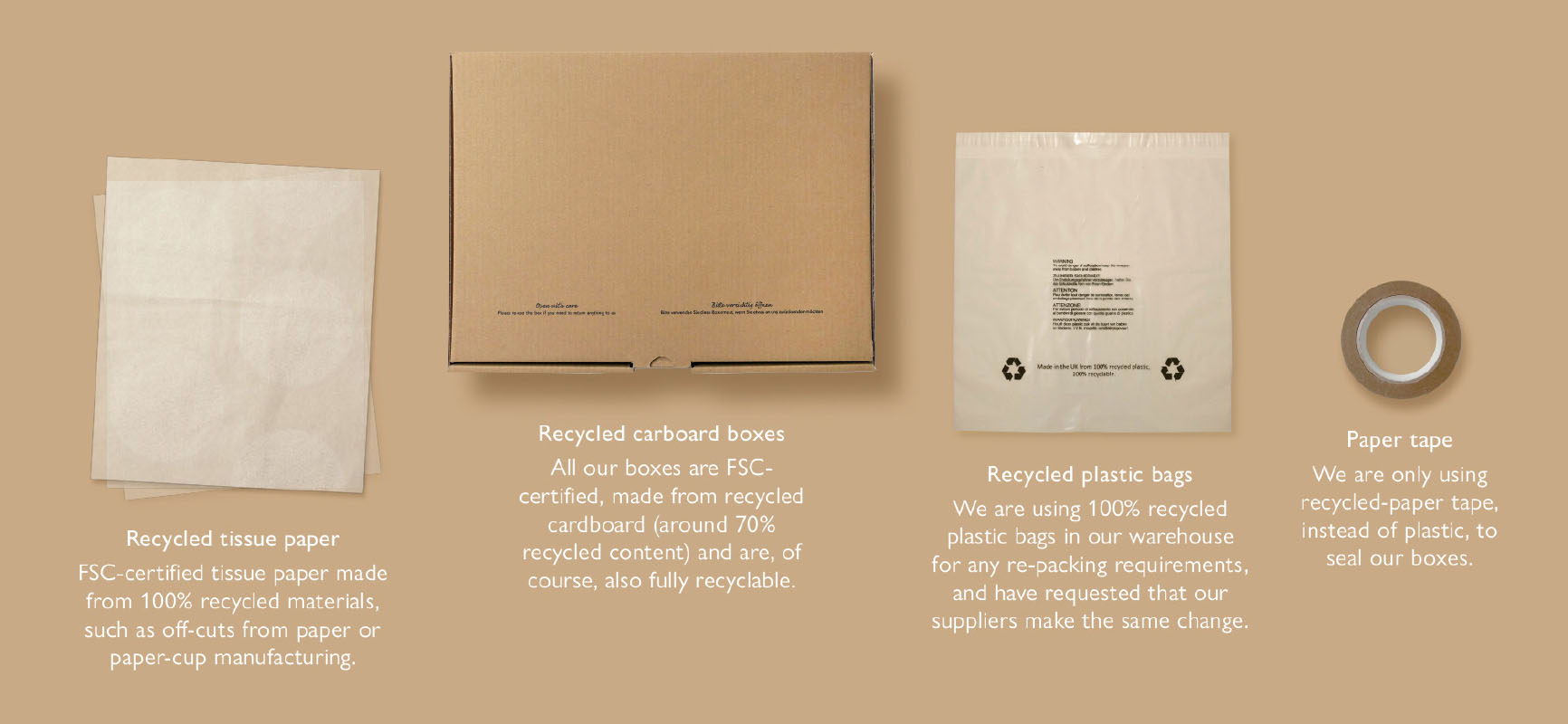
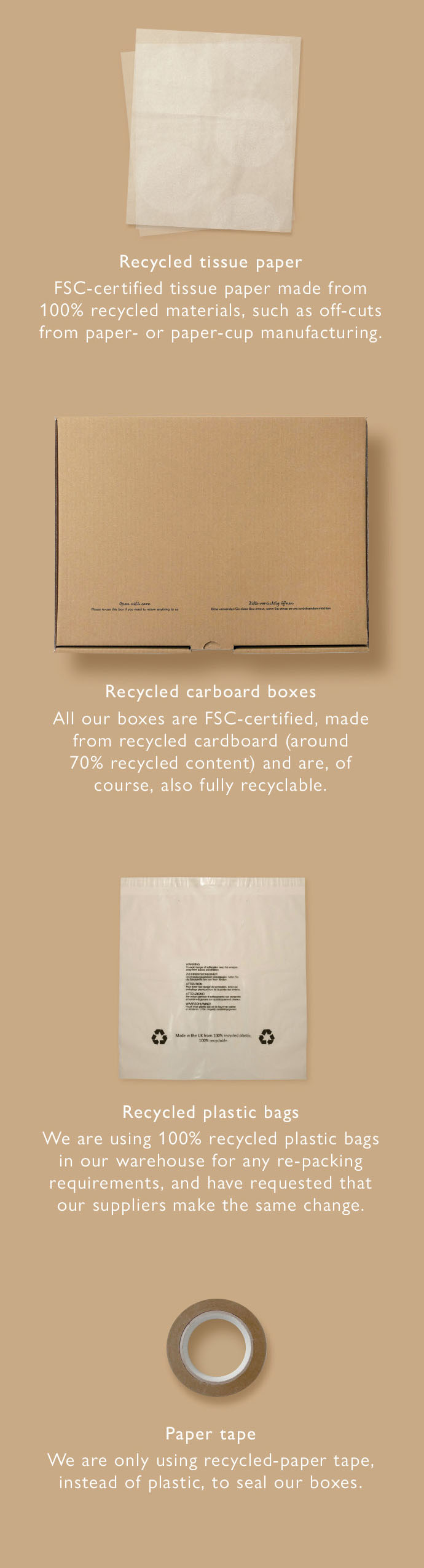
We send all our orders out in sturdy recycled cardboard boxes that are made locally in Nottingham and Warwickshire. We have never imported cardboard. We ask that anything unsuitable or the wrong size is sent back to us in the same box which ensures that the item is protected and the box can be reused. These boxes are made from around 70% recycled material and are themselves 100% recyclable. One of our box suppliers also collects any cardboard waste we produce and recycles it for us.Our tissue paper made from 100% recycled materials, like off-cuts from paper or paper-cup manufacturing. It is made in Germany and printed in England at a facility which is powered by a hydro-electric turbine. The inks used are all water-based and the facility has a de-inking plant so nothing goes into the drain except clean water.
We are using 100% recycled plastic bags in our warehouse for any re-packing needs, and we have requested our suppliers to also make the same change. Although we would like to reduce our plastic usage even more, the packaging we use ensures that our products travel safely and undamaged from our suppliers to our warehouse, and on to customers. In 2024 we started a project dedicated to finding a sustainable hanger solution that aligns with both our operational needs and environmental goals.

Catalogues
Planning, designing and creating our catalogues is a big part of our business and we have great manufacturing partners helping us make sure that we can create catalogues in as environmentally friendly a way as possible.
The paper for our catalogues is manufactured mostly in Finland, but also in Germany and Scotland, from the wood pulp of sustainably-grown trees. It is made by UPM, who have a very strong sustainability agenda. They have zero tolerance for deforestation, rainforests are off-limits and have strict processes in place to ensure that forests always grow more than they are used. It is one of the world's largest users of recovered paper and sources virgin materials only from controlled and traceable wood sources. The wood for our 2023 catalogues came from responsibly-managed forests mostly in Finland, with some from Brazil, Germany, the Baltics and the rest of Europe. Our paper supplier plants 50 million trees a year which is roughly 100 trees planted per minute – and we are glad to support that process.

Buildings
In recent years, we have made significant investments to make our buildings as environmentally friendly as possible. In 2023 we finished installing solar panels on the roof of our warehouse. In 2024 they produced 40,592kWh of electricity that was sold back to the UK grid, more than what is required to power our London office for a year.
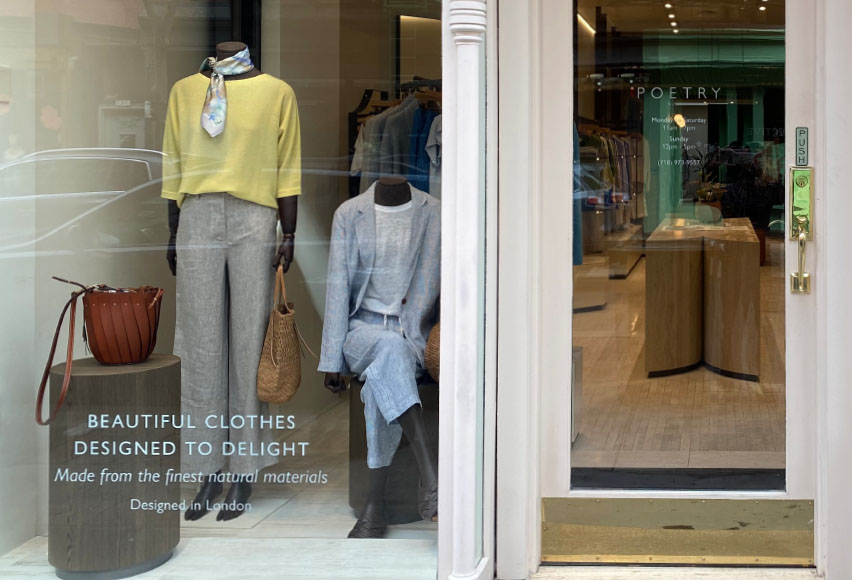
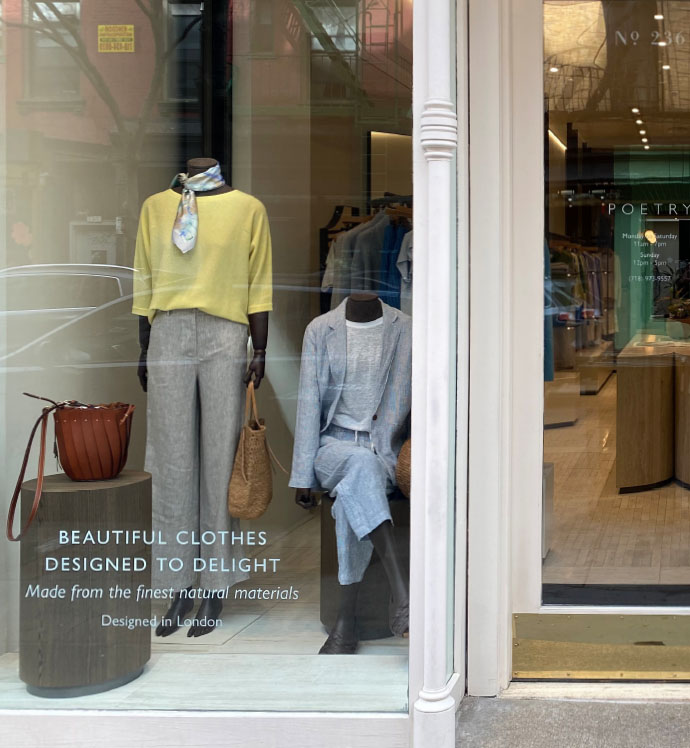
A significant change in 2024 has also been the opening of a new Poetry store in New York.
Waste
We don’t dispose of anything to landfill, and recycle whenever possible. In 2024 we collected for recycling 53.96 tonnes of cardboard, 2.22 tonnes of plastic waste and 3.26 tonnes of mixed recycling. We are pleased that our household recycling rate in 2024 has risen from 24% to 32%, while overall waste has decreased.
We never have, and never will, throw away a single piece of clothing. All returns are opened by hand and the items are carefully checked for damage. If the items are unworn, other than for the purposes of trying on, they are steamed to take out the creases, and re-packed in recyclable bags, ready to be re-sold.
In addition to our in-house efforts to repair every piece of clothing to be as-new, we also use our unsold stock to do some good. In 2024 we have donated 2,567 kg of clothing to charities like Empowering Women, Wrap Up, Barnardo’s, British Red Cross, South Bucks Hospice, and for aid in Ukraine.
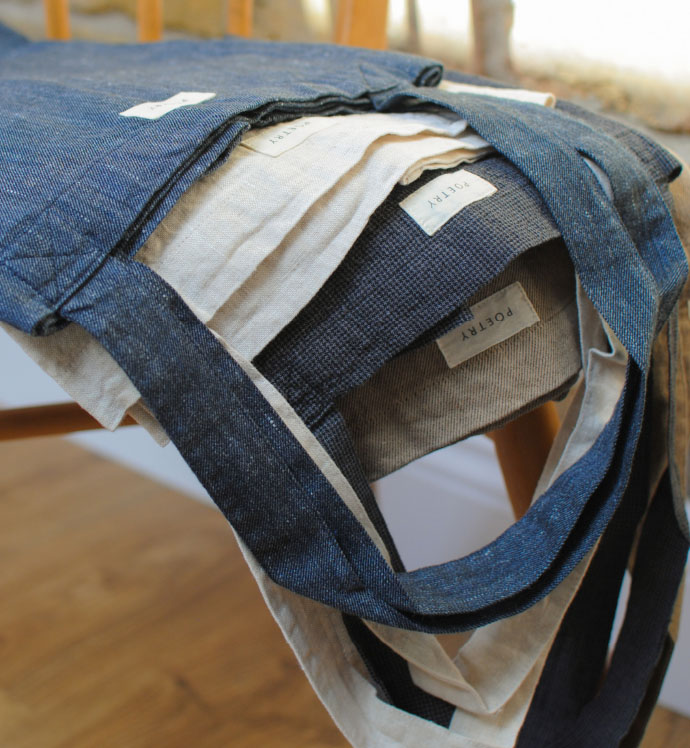
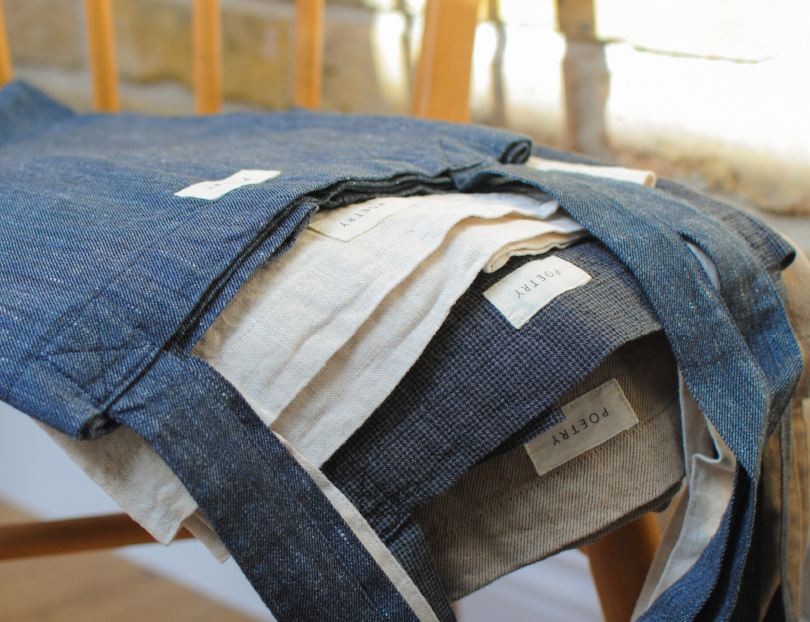
In 2024, we also started a project of using our leftover stock fabric to create tote bags, ensuring that no material went to waste. In total, we produced 2,475 tote bags from our surplus stock fabrics.
Transportation
Travelling for work, such as going to trade shows, visits to suppliers and research trips, contributes to our footprint. These real-life interactions are what inspire and fuel our designers and ensure that we truly understand our suppliers. We always travel in economy class, which reduces the flight footprint significantly, and choose to travel by train whenever possible.
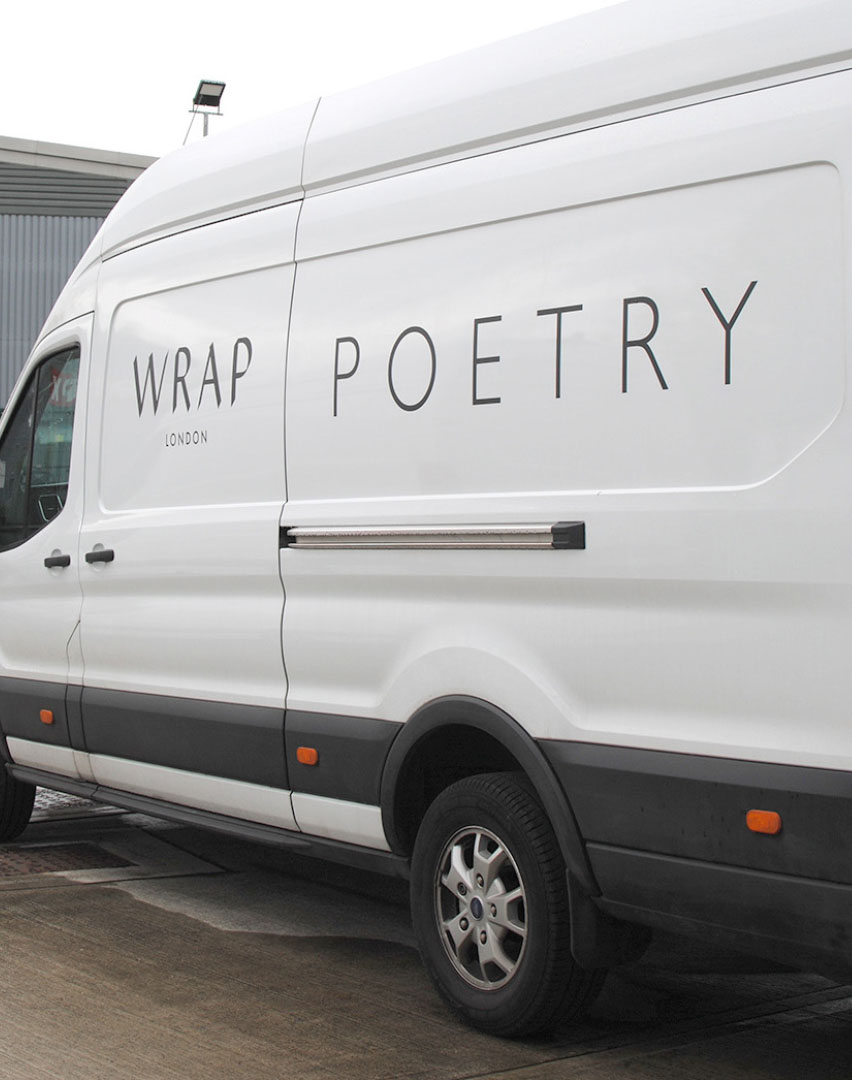
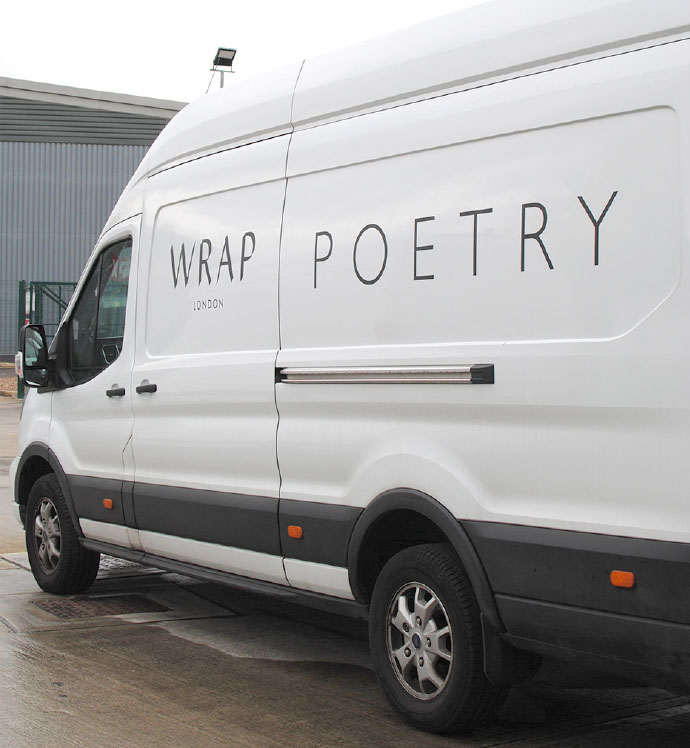
A large part of the transport emissions is created when our products travel from the suppliers’ factories to our warehouse in the UK. Sea freight is the most common transportation method for our products. Shipping by sea takes much longer than by air but has around four times less environmental impact.
To deliver our products from our warehouse to your doorstep we use FedEx, Royal Mail and DHL postal services. All companies are committed to reducing their environmental footprint and are introducing innovations like electric transport, efficient route planning and renewable energy.